
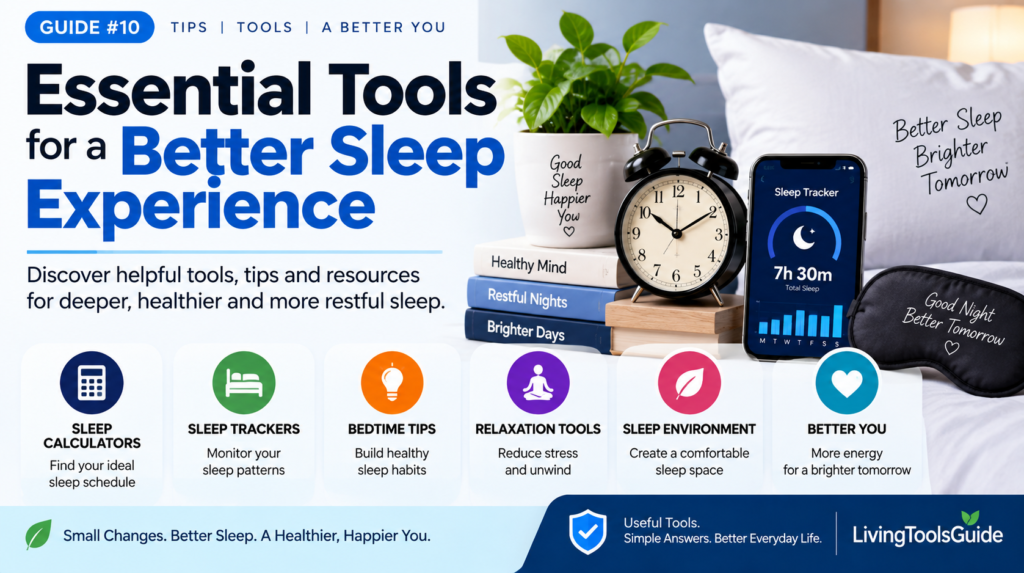
Essential Tools for a Better Sleep Experience
Getting enough quality sleep is an important part of maintaining your overall well-being. A regular bedtime routine, a comfortable sleeping environment, and useful sleep tools can make it easier to understand your sleep habits and organize your nightly schedule.
Today, there are many simple tools that can help with bedtime planning. Sleep calculators can estimate suitable bedtimes, sleep trackers can record sleep patterns, and relaxation tools can help create a calmer evening routine.
In this guide, we’ll look at practical sleep tools you can use to plan your schedule, understand your habits, and create a more comfortable sleep experience.
1. Sleep Calculators
A sleep calculator is one of the simplest tools for planning your bedtime. You enter the time you need to wake up, and the calculator helps estimate possible bedtimes based on your desired amount of sleep.
For example, if you need to wake up at 6:30 AM, you can work backward from that time to plan when you should go to bed.
Sleep calculators are especially useful when your morning schedule changes or when you are trying to establish a more consistent bedtime routine.
2. Sleep Trackers
Sleep trackers are another popular type of sleep tool. They may be available through smartphones, smartwatches, fitness trackers, or dedicated sleep devices.
Depending on the device or application, a sleep tracker may record information such as:
- Bedtime and wake-up time
- Estimated sleep duration
- Nighttime movement
- Sleep schedule consistency
- Changes in sleep patterns over time
These measurements are estimates and should not be treated as a medical diagnosis. However, they can help you notice patterns in your routine.
3. Alarm and Wake-Up Tools
A basic alarm clock remains one of the most useful bedtime tools.
Some modern alarm apps provide additional features, including gradual sounds, multiple alarms, bedtime reminders, and recurring schedules.
The goal is not simply to wake up at a certain time. Keeping a reasonably consistent wake-up time can also make it easier to maintain a regular daily schedule.
4. Bedtime Reminder Tools
It is easy to stay awake longer than planned when watching television, browsing online, or using a phone.
A bedtime reminder can provide a simple signal that it is time to begin winding down.
Many phones and wearable devices allow you to schedule recurring bedtime notifications. You can use the reminder as the beginning of a routine that might include preparing for the next day, reducing stimulating activities, and getting ready for bed.
5. Relaxation Tools
Relaxation tools may help you create a calmer transition between daytime activities and bedtime.
Examples include breathing timers, meditation applications, calming audio, white-noise tools, and simple relaxation exercises.
You do not necessarily need complicated technology. Even a basic timer can be useful for setting aside a few quiet minutes before bed.
Experiment with different options and choose something that fits comfortably into your routine.
6. Sleep Environment Tools
Your bedroom environment can also affect how comfortable you feel at night.
Simple tools such as blackout curtains, eye masks, fans, room thermometers, and white-noise devices may help you adjust light, sound, and temperature according to your preferences.
The best setup varies from person to person. Instead of buying many products at once, identify anything that regularly interferes with your sleep and address those issues individually.
7. Sleep Journals
Not every useful sleep tool needs to be electronic.
A simple sleep journal can help you record when you went to bed, approximately when you fell asleep, when you woke up, and how rested you felt the following morning.
You can also note changes in your routine, such as exercise, late meals, travel, or unusual schedules.
After several weeks, your notes may make patterns easier to recognize.
How to Choose the Right Sleep Tools
You do not need to use every tool listed above. Start with the problem you are trying to solve.
If you have difficulty planning your bedtime, try a sleep calculator. If you want to understand your routine, consider a sleep tracker or journal. If your bedroom is uncomfortable, focus first on improving your sleep environment.
The most useful sleep tools are usually the ones that are simple enough to become part of your normal routine.
Build a Consistent Sleep Routine
Tools can provide useful information, but they work best alongside sensible sleep habits.
Try to keep your bedtime and wake-up schedule reasonably consistent, allow enough time for sleep, and create a relaxing period before bedtime. It can also help to keep your bedroom comfortable and reduce activities that make it difficult to wind down.
Remember that consumer sleep tools provide estimates and general guidance. Persistent sleep difficulties, excessive daytime sleepiness, or other concerning symptoms are better discussed with a qualified healthcare professional.
For more information about healthy sleep habits and recommended sleep duration, see the CDC’s About Sleep guide.
Try Our Sleep Calculator
If you want a simple place to begin, use our Sleep Calculator to estimate bedtime and wake-up times based on your preferred sleep schedule.
It can help you plan your evening and compare different bedtime options without doing the time calculations manually.
Final Thoughts
Sleep calculators, trackers, alarms, journals, relaxation aids, and bedroom-environment tools can all serve different purposes. You do not need a complicated collection of devices to improve your routine.
Start with one or two sleep tools that address your needs, use them consistently, and pay attention to what actually helps you maintain a comfortable and practical sleep schedule.