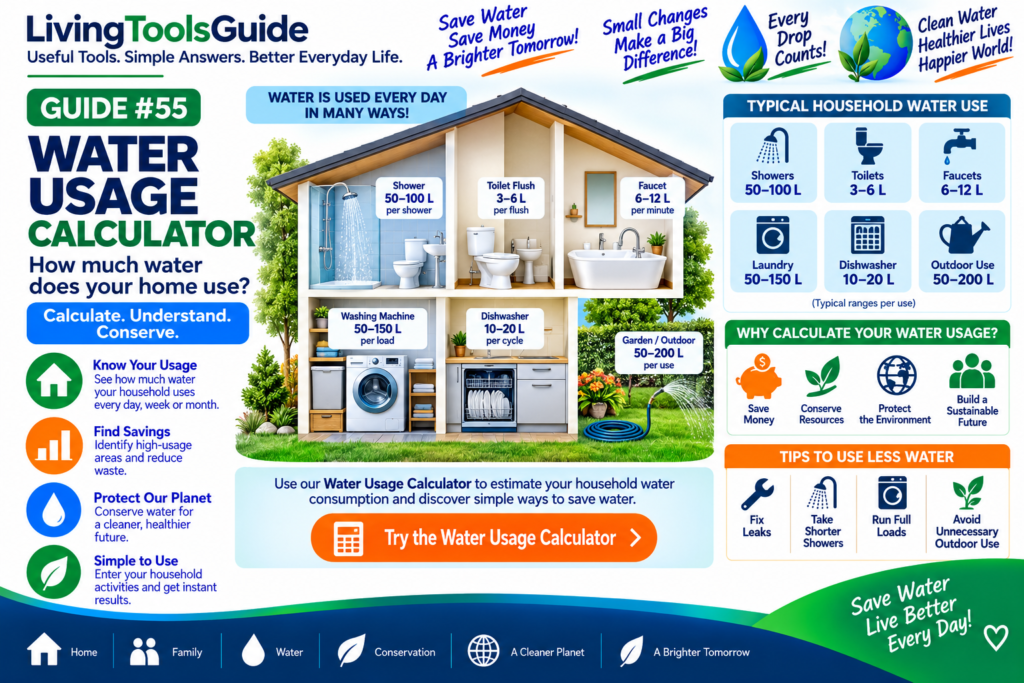
Water is used throughout the day for drinking, showering, washing clothes, flushing toilets, cooking, cleaning, and many other household activities. But have you ever wondered how much water your home actually uses?
A Water Usage Calculator makes it easy to estimate your household water consumption and understand where most of your water is being used.
What Is a Water Usage Calculator?
A Water Usage Calculator is a simple online tool that estimates how much water you use over a certain period.
Depending on the calculator, you may enter information about activities such as:
- Showers and baths
- Toilet flushing
- Washing clothes
- Dishwashing
- Faucets and sinks
- Outdoor watering
- Other household water use
The calculator then gives you an estimate of your overall consumption.
Why Calculate Your Water Usage?
Knowing how much water you use can help you understand your household habits.
It can also help you identify areas where you may be able to reduce unnecessary water use. Even small changes repeated every day can make a noticeable difference over a month or year.
How to Calculate Water Usage
A basic calculation is:
Total Water Usage = Water Used Per Activity × Number of Uses
For example, suppose an activity uses approximately 8 liters of water each time and happens 5 times per day.
8 × 5 = 40 liters per day
Over 30 days:
40 × 30 = 1,200 liters per month
When several household activities are involved, calculating everything manually can become inconvenient. That’s where a Water Usage Calculator is useful.
Common Sources of Household Water Use
Bathrooms are often a major source of household water consumption because of showers, baths, sinks, and toilets.
Kitchens also use water for cooking, drinking, cleaning, and dishwashing. Laundry can add significant consumption depending on how frequently the washing machine is used.
Outdoor activities such as watering gardens and washing vehicles can further increase total usage.
How to Use the Water Usage Calculator
Using the calculator is simple.
Enter the requested information about your household water activities. Check that the values are correct, then calculate your estimated usage.
Your result can help you understand approximately how much water you use each day, week, or month.
Ways to Reduce Household Water Usage
You don’t necessarily need major lifestyle changes to conserve water. Turning off the tap while brushing your teeth, repairing leaking faucets, taking slightly shorter showers, running washing machines with full loads, and avoiding unnecessary outdoor water use can all help.
Tracking your usage periodically can also show whether your conservation efforts are working.
For more information about household water use and water conservation, see the WaterSense resources from the U.S. Environmental Protection Agency.
Water Usage Calculator vs. Water Intake Calculator
These two calculators serve different purposes.
A Water Usage Calculator estimates water consumed through household activities such as showers, toilets, laundry, and cleaning.
A Water Intake Calculator estimates how much water a person may need to drink.
Therefore, use the appropriate calculator depending on what you want to measure.
Frequently Asked Questions
What does a Water Usage Calculator calculate?
It estimates the amount of water used by household activities over a selected period.
Can I calculate monthly water usage?
Yes. Daily usage can be multiplied by the number of days in the month to estimate monthly consumption.
Why should I track household water use?
Tracking usage can help identify high-consumption activities and opportunities to conserve water.
Is the calculator result exact?
It is generally an estimate. Actual consumption can vary depending on appliances, fixtures, household habits, and other factors.
How can I reduce my water usage?
Fix leaks, reduce unnecessary running water, take shorter showers, use full laundry loads, and monitor outdoor water consumption.
Tracking household water use can help you identify waste, understand everyday consumption habits, and find simple opportunities to conserve water. Small changes such as fixing leaks, taking shorter showers, and running full loads of laundry can reduce overall water use over time.