
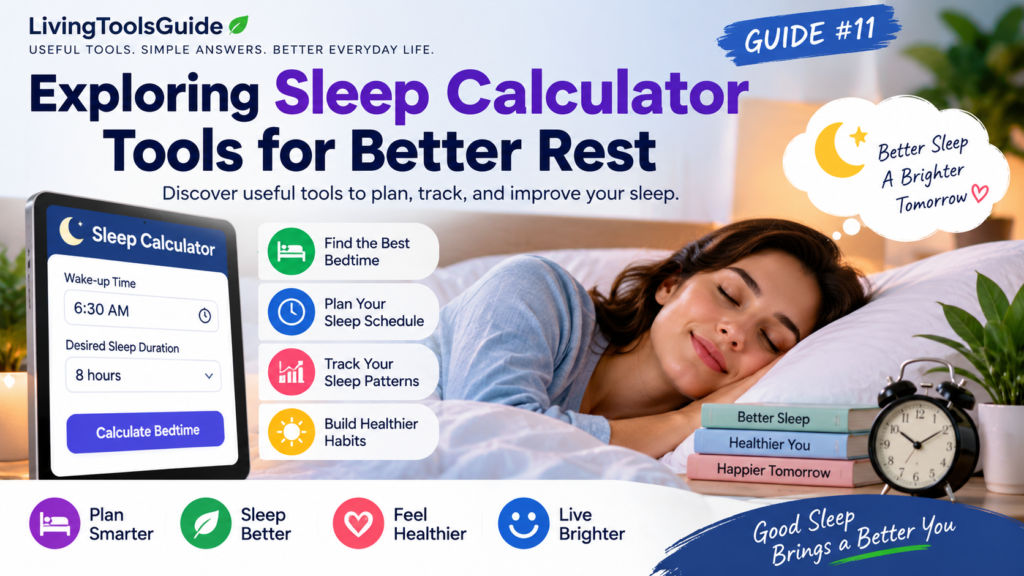
Exploring Sleep Calculator Tools for Better Rest
Getting enough sleep is an important part of maintaining a healthy daily routine. However, deciding when to go to bed can sometimes be difficult, especially when your wake-up time changes from one day to another. Sleep calculator tools can make this planning process much easier.
These simple tools help you estimate bedtime or wake-up time based on your preferred sleep duration and schedule. Some tools focus mainly on bedtime calculations, while others may include sleep tracking, reminders, or additional information about sleep habits.
In this guide, we’ll explore how sleep calculator tools work, what they can and cannot tell you, and how to use them as part of a practical sleep routine.
What Are Sleep Calculator Tools?
Sleep calculator tools are designed to help you plan when to sleep and wake up.
A basic calculator may ask you to enter your desired wake-up time and the number of hours you want to sleep. It then works backward to estimate an appropriate bedtime.
Other tools may work in the opposite direction. You enter your bedtime, and the calculator estimates a wake-up time based on the amount of sleep you want.
These calculations can be useful for planning, but they should be considered estimates rather than medical recommendations.
How Does a Sleep Calculator Work?
The basic calculation is straightforward.
Suppose you want to wake up at 6:30 AM and plan to get 8 hours of sleep.
Working backward:
6:30 AM − 8 hours = 10:30 PM
That means you would need approximately eight hours between 10:30 PM and 6:30 AM.
In real life, you may also want to allow some additional time for falling asleep. Everyone’s routine is different, so calculator results can be adjusted according to your own experience.
1. Bedtime Calculators
A bedtime calculator helps estimate when you should go to bed based on your desired wake-up time.
For example, someone who needs to wake at 7:00 AM can enter that time and compare different bedtime options.
This can be especially useful for people who have a fixed morning schedule but are unsure when they should begin preparing for sleep.
2. Wake-Up Time Calculators
A wake-up calculator works in the opposite direction.
Instead of starting with a wake-up time, you enter when you plan to go to bed. The tool then estimates possible wake-up times according to the sleep duration you select.
This can be useful on weekends, holidays, or days when your morning schedule is more flexible.
3. Sleep Duration Calculators
Sleep duration calculators help determine the amount of time between bedtime and wake-up time.
For example:
Bedtime: 11:00 PM
Wake-up time: 7:00 AM
Time between them: 8 hours
This is a simple calculation, but a calculator makes it convenient when the times are less straightforward.
It can also help you compare different schedules quickly.
4. Sleep Tracking Tools
Some sleep-related applications go beyond simple calculations and attempt to track sleep patterns.
Depending on the device or application, they may estimate bedtime, wake-up time, nighttime movement, and overall sleep duration.
Tracking information can help you notice changes in your routine over time. However, consumer devices provide estimates and should not be considered a substitute for professional medical evaluation.
5. Bedtime Reminder Tools
Planning a bedtime is only useful if you remember to follow it.
Bedtime reminders can notify you when it is time to begin your nighttime routine. Many smartphones, watches, and calendar applications allow recurring reminders to be scheduled.
For example, if your target bedtime is 10:30 PM, you might set a reminder earlier in the evening so you have time to prepare for bed.
Benefits of Sleep Calculator Tools
One advantage of sleep calculator tools is simplicity. Instead of repeatedly calculating the difference between bedtime and wake-up time yourself, you can enter your schedule and receive an immediate estimate.
They can also help you compare several bedtime possibilities, plan around changing work or travel schedules, and become more aware of how much time you are allowing for sleep.
The goal is not to follow every calculated time perfectly. Rather, these tools can provide a convenient starting point for planning a more consistent schedule.
Limitations of Sleep Calculators
A calculator cannot determine exactly how much sleep a particular person needs on a particular night.
Sleep needs vary according to factors such as age and individual circumstances. The amount of time spent in bed also does not necessarily equal the amount of time actually asleep.
Sleep calculators also cannot diagnose sleep disorders or explain persistent tiredness.
If you regularly have difficulty sleeping, experience excessive daytime sleepiness, or have other concerns about your sleep, consider discussing them with a qualified healthcare professional.
For more information about healthy sleep, recommended sleep duration, and sleep habits, see the CDC’s About Sleep guide.
How to Get Better Results from Sleep Calculator Tools
Start with a realistic wake-up time and allow enough time for your normal bedtime routine.
Try following the schedule consistently for several days rather than changing it every night. You can then adjust the timing based on how the routine works for you.
A simple sleep journal can also be useful. Record your approximate bedtime, wake-up time, and how rested you feel in the morning. Over time, this may help you identify patterns that a calculator alone cannot show.
Sleep Calculator Tools vs. Sleep Trackers
Although the terms are sometimes used together, calculators and trackers perform different jobs.
A sleep calculator primarily helps you plan a schedule. A sleep tracker attempts to record or estimate what happened while you were sleeping.
For many people, a calculator is enough for basic bedtime planning. Others may find tracking useful for observing changes in their routine.
Neither should be treated as a medical diagnostic tool.
Try Our Sleep Calculator
You can use our Sleep Calculator when you want a quick way to estimate bedtime or wake-up time.
Enter your preferred schedule and compare the available times. This can save you from manually calculating bedtime each evening and provide a convenient starting point for building a regular routine.
Final Thoughts
Sleep calculator tools can make bedtime planning simpler. Bedtime calculators, wake-up calculators, duration calculators, reminders, and trackers each provide different ways to understand or organize your sleep schedule.
Use these tools as practical planning aids rather than exact predictions of sleep quality. Combine them with a consistent routine and pay attention to how your own sleep schedule works for you.
A simple tool cannot guarantee better sleep, but it can make planning for adequate rest easier.